



Tribology Applications – A Mechatronics-Assisted Approach to Traditional Viscometers
Prof. Dr. Ertuğrul Durak Dept. of Mech. Engineering, Suleyman Demirel University ertugruldurak@sdu.edu.tr The project titled “Smart Viscosity Measurement and... Read more.

Lubrication Applications Subjected to the Effects of Magnetic Fields
The presence of electric or magnetic fields can significantly alter the lubrication process in various types of bearings used as support elements in machines, as... Read more.

Journal bearing design criteria – VII Measuring oil film thickness
As stated in the previous articles, radial journal bearings have operating parameters sufficient to carry the bearing load between the journal (shaft) and the bearing... Read more.

Journal bearing design criteria – VI Oil flow in bearing and leak flow at bearing edges
Sufficient amount of oil should enter the bearing in order to form a hydrodynamic oil layer with the bearing operation parameters (such as speed, lead, oil viscosity,... Read more.

Journal bearing design criteria – V Bearing Width / Diameter (B/D) Ratio
In journal bearings, bearing width (length) / bearing diameter (B/D) ratio is an important parameter for determining the load carrying capacity of the bearing. Usually... Read more.
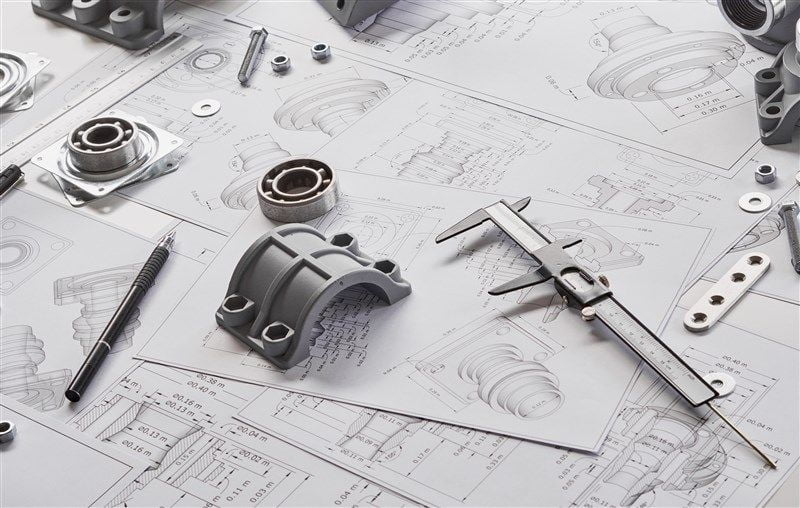
Journal bearing design criteria IV – Bearing clearance
Elements that carry power transmission elements such as gear wheel, belt and pulley or chain wheel mechanisms are called shafts. Shafts that assume this carrying... Read more.

Journal bearing design criteria III / Oil galleries
The main purpose of lubrication is to form an oil film between the two surfaces, which has sufficient thickness and is resistant to operating conditions. It aims... Read more.

Journal bearing design criteria – II
Bearing selection and design processes can be summarized as: -Selecting the optimum bearing type, -Calculating bearing sizes that will ensure safety, -Reviewing... Read more.

Journal bearing design criteria – I
In general, design is a production process that aims to find a solution for a specific function. Several alternative solutions can be offered to solve the problem... Read more.

Plant-oil-based lubricants – II
Technical terms such as biodegradable, bio-based, environment-friendly, recyclable, renewable, non-toxic, green, etc. are frequently used in the industry as well... Read more.