

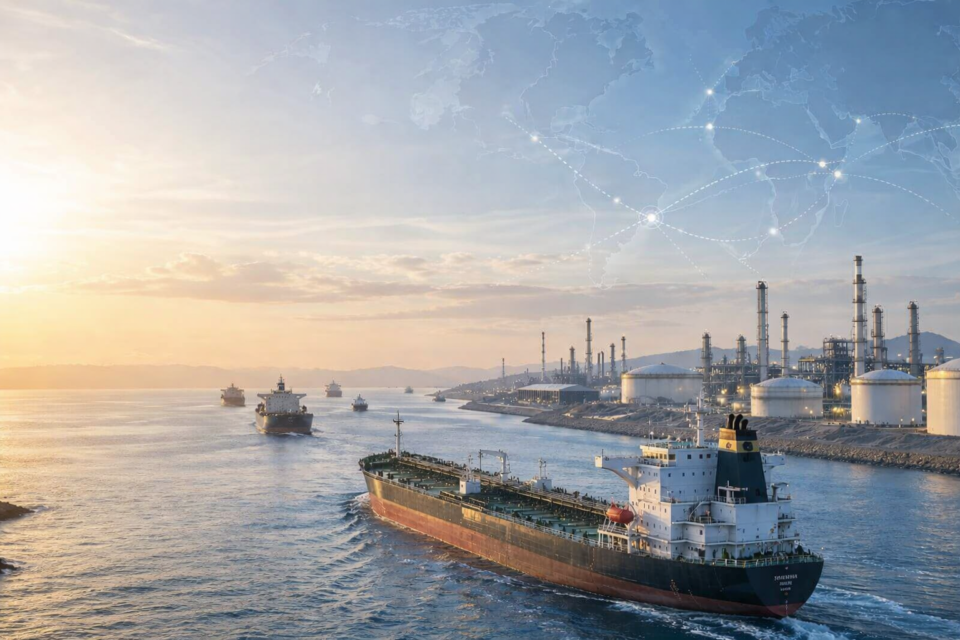
Renewed geopolitical tension in the Middle East has once again pushed supply security to the top of the global energy agenda. Developments around the Persian Gulf and the Strait of Hormuz are being closely watched not only for crude oil, but also for diesel, naphtha, petrochemical products and the base oil supply chain. Sharp recent moves in oil prices and news flow surrounding tanker traffic are also drawing attention from the lubricants industry.
So far, there has been no confirmed direct production loss at regional base oil facilities. However, market participants note that physical damage is only one part of the picture. Logistics disruptions, insurance costs and shipment delays can move prices quickly even without refinery outages.
Why the Gulf Region Matters
The Gulf remains a strategic production hub, particularly for Group II and Group III base oils. Large-scale, modern refining complexes in Saudi Arabia, the United Arab Emirates, Bahrain, Qatar and Kuwait supply regular volumes to Europe, Türkiye, India and Asia.
Key points:
- The Middle East is one of Europe’s major suppliers of Group III base oils
- Shipments into Asia play an important role in global pricing balance
- Import-dependent markets such as Türkiye rely significantly on Gulf-origin supply
For that reason, any disruption in the region can tighten market sentiment even without direct production losses.
Main Risk Lies in Logistics, Not Production
According to market observers, the most immediate risk is not necessarily refinery shutdowns, but transportation bottlenecks.
The Strait of Hormuz Factor
The Strait of Hormuz remains one of the world’s most critical energy chokepoints, with around 20 million barrels per day of crude oil and petroleum products moving through the route in recent years.
Potential impacts include:
- Slower tanker movements
- Longer waiting times at ports
- Diversion to alternative routes
- Greater uncertainty in delivery schedules
Since base oils move through the same broader logistics system, the segment is also exposed.
Freight and Insurance Costs Under Pressure
During periods of geopolitical stress, transportation costs often react faster than product fundamentals.
Current concerns include:
- Higher war-risk insurance premiums
- Rising spot tanker freight rates
- More cautious vessel deployment into the region
Even if base oil prices remain stable, landed import costs can still increase materially.
If Crude Rises, Base Oils Feel It Too
Recent volatility has pushed Brent crude back above the USD 100/bbl level, reflecting renewed market risk sentiment.
While base oils do not move in perfect correlation with crude, higher oil prices can still affect:
- Vacuum gas oil and feedstock costs
- Spot base oil offers
- Early buying activity from consumers
- Defensive pricing strategies from sellers
Not Every Refinery Produces Base Oils
One common misunderstanding in energy markets is assuming every refinery is a base oil producer.
In reality, base oil manufacturing requires advanced processing such as:
- Hydrocracking
- Hydroisomerization
- Solvent refining
- Wax conversion
Therefore, operational issues at a refinery do not automatically mean base oil supply losses. The key question is whether the affected site includes dedicated base oil units.
What It Could Mean for Türkiye
Türkiye remains structurally dependent on imported base oils, meaning Gulf-related disruptions could be felt through:
- Higher import prices
- Longer lead times
- FX + freight-driven cost pressure
- More difficult inventory planning
Industry sources nevertheless stress that disciplined stock management and diversified sourcing are more effective than panic buying during short-term uncertainty.
Alternative Supply Routes
If disruptions become prolonged, buyers may turn to:
- U.S.-origin Group II base oils
- Group III cargoes from South Korea and Singapore
- Limited European spot availability
However, these alternatives do not always offer the same combination of price, delivery speed and specification compatibility.
Conclusion: Markets Are Cautious, Risk Is Real
At present, there is no confirmed large-scale base oil production outage. Yet in energy markets, risk perception often impacts pricing before physical shortages appear.
For the lubricants industry, the key indicators to watch in the coming days will be:
Tanker traffic through the Strait of Hormuz
- Crude oil price direction
- Freight and insurance costs
- Gulf-origin base oil offers
- Official statements and shipment lead times
Short term volatility risk remains elevated. In the medium term, the decisive factor will be whether regional logistics flows normalize quickly.