
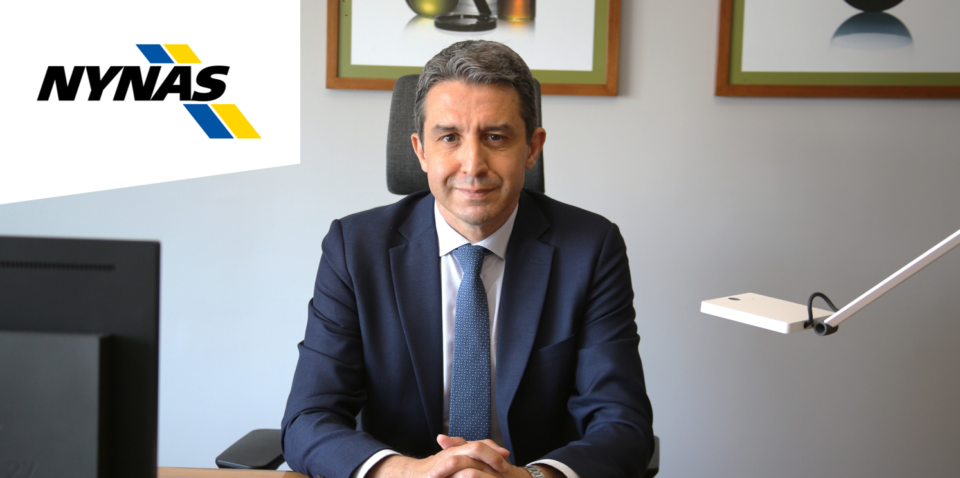
Interview with Güney Devrim İldiri,
General Manager of Nynas Türkiye and Central Asia
With the energy transition, electrification, data centers, artificial intelligence applications, and renewable energy investments, the need for electricity infrastructure has reached a critical threshold. This transformation requires not only the integration of new energy sources, but also the renewal of aging grids and the operation of existing networks in a more reliable, efficient, and sustainable manner. In such a period, transformer oils and specialty insulating fluids are becoming increasingly prominent as critical components of energy systems.
In our interview with Güney Devrim İldiri, General Manager of Nynas Türkiye and Central Asia, we discussed the drivers behind the company’s strong financial performance in 2025, the impact of the energy transition on the lubricants industry, and the electrification investments gaining momentum across the region. Mr. İldiri emphasizes that energy security, asset life management, and sustainability are no longer separate topics, but complementary elements of the same strategy.
In the interview, we also explored the Nynas ReSolution approach, which forms the foundation of the company’s sustainability vision; the initiatives being carried out in line with its 2050 carbon neutrality target; the growing role of bio-based and re-refined products in the industry; the position of the Türkiye and Central Asia markets within the energy transition; and the potential impact of COP31, to be held in Antalya, on the global energy agenda. Exclusive to Lubricant World, this interview offers important perspectives on the future of energy infrastructure while also inspiring the industry on sustainability.
Nynas strengthened its financial structure and increased profitability in 2025 thanks to operational reliability and strong demand. What were the key factors behind this success?
When we look at 2025, the foundation of our success was not only strong demand or favorable market conditions, but also the specialization strategy we have pursued for many years. At Nynas, we are not a volume-driven commodity producer in the markets we serve; we are a company that develops specialty products delivering performance for critical infrastructure. This approach has become even more meaningful at a time when the energy transition is accelerating and electrification is gaining momentum on a global scale.
One of the most critical dynamics facing the energy sector today is the structural growth in global electricity demand. The growing adoption of electric vehicles, the rapid expansion of data centers and AI infrastructure, rising renewable energy investments, and accelerating electrification in industry are placing increasing pressure on electricity transmission and distribution systems. At the same time, a significant portion of the existing grid infrastructure was designed decades ago for very different operating conditions. Today, these assets are expected to operate under higher loads, for longer periods, and with uninterrupted reliability.
This transformation has elevated transformer oils and insulating fluids from being merely technical consumables to becoming strategic elements for the resilience of energy infrastructure and energy security. Extending asset life, optimizing maintenance costs, and reducing operational risks are now among the key priorities of energy companies.
At Nynas, our approach is built on this strategic perspective. We do not simply offer our customers high-quality insulating oils; we develop long-term solutions that improve the performance of their existing equipment, extend service life, and reduce total cost of ownership.
In line with this vision, re-refined insulating oils such as NYTRO® RR 900X support the circular economy by enabling the reuse of valuable resources, while bio-based NYTRO® BIO 300X combines high technical performance with a lower carbon footprint. In today’s energy sector, sustainability and operational reliability are no longer independent objectives; they are two complementary pillars of strong and resilient energy infrastructure.
Do you believe this positive momentum has continued into 2026?
As we moved into 2026, we have seen this momentum continue. Across Türkiye and Central Asia, grid modernization, renewable energy investments, new transformer manufacturing capacities, and electrification projects are progressing at full speed. For this reason, we believe demand for specialty products that support the reliability, efficiency, and sustainability of energy infrastructure will continue to grow in the coming period. At Nynas, we will continue to measure growth not only by sales figures, but also by the contribution we make to the energy transition.

We know that sustainability and energy transition are among your key areas of expertise. How does Nynas’ ReSolution approach address sustainability?
Sustainability is no longer a matter of choice in the energy sector; it has become one of the core pillars of how business is conducted. Today, the energy transition is widely recognized as one of the largest industrial transformations in the world. However, there is an important reality that is often overlooked. In order to reduce carbon emissions, we need to build more renewable power plants, more electricity grids, more transformers, and more energy infrastructure. In other words, to make the energy transition possible, we first need to undertake a massive physical transformation investment.
For this reason, we do not view sustainability solely through the lens of emissions reduction. From our perspective, sustainability requires energy security, resource efficiency, circular economy principles, and long-life infrastructure to be addressed together. This understanding lies at the heart of Nynas’ ReSolution approach. While developing products that support the energy transition, we are also focused on reducing the environmental impact of our own operations.
Through our ReSolution approach, we contribute to making the infrastructures that enable the energy transition more reliable, more efficient, and lower in carbon, while managing all dimensions of sustainability in an integrated way. In that sense, we do not see sustainability as a separate line of business or a regulatory obligation, but as the very essence of our business.
Could you elaborate on the concrete steps Nynas has taken toward its 2050 carbon neutrality target and how these steps contribute to the transformation of the industry?
One of the concrete steps we have taken toward our 2050 carbon neutrality target is our carbon capture and storage (CCS) initiative in Sweden. This project is an important benchmark not only for Nynas, but also for the future of energy-intensive industries. In addition, we continue to improve energy efficiency in our production processes, reduce operational emissions, and develop lower-carbon solutions throughout our supply chain.
On the product side, we are working to embed sustainability without compromising performance. Solutions such as bio-based NYTRO® BIO 300X and re-refined NYTRO® RR 900X are concrete examples of this approach. Because in the future, success will not be defined solely by developing lower-carbon products, but by doing so while preserving the reliability of energy systems.
From the perspective of Türkiye and Central Asia, we see a significant opportunity. With growing electricity demand, new renewable energy investments, and grid modernization projects, the region is becoming one of the key centers of the energy transition. For this transformation to take place sustainably, there will be a greater need than ever for high-performance, long-life technologies with lower environmental impact.
Do you find the sustainability and energy transition agendas of players operating in the Türkiye and Central Asia markets satisfactory? What message would you like to give to our industry regarding the opportunities created by this field?
Over the past few years, we have observed a clear transformation across the Türkiye and Central Asia markets. In the past, sustainability was often regarded by many companies as a topic for corporate reports or as a regulatory requirement. Today, however, an increasing number of companies are associating it with competitiveness, investment attractiveness, and long-term growth potential.
We are seeing a particularly important shift in the approach of organizations operating in the energy, infrastructure, and industrial sectors. Instead of focusing solely on initial investment costs, companies are increasingly paying attention to criteria such as equipment lifetime, operational efficiency, energy losses, carbon footprint, and total cost of ownership. This indicates that the sector is moving toward a more mature and strategic perspective.
Türkiye is one of the most important actors in this transformation within the region. The growth in renewable energy investments, energy storage projects, modernization of the electricity grid, and the increasing electrification of industry are positioning the country as one of the key centers of the energy transition. Similarly, in countries such as Azerbaijan, Kazakhstan, and Uzbekistan, we see significant investments aimed both at strengthening energy security and increasing economic diversification.
That said, I believe there is still considerable room for development ahead. Today, many organizations still perceive sustainability primarily as a cost item. Yet the winners of the future will be those companies that see it as a strategic investment capable of driving efficiency gains, strengthening risk management, and creating competitive advantage. In particular, I believe investments in reliability, asset life, and resource efficiency within energy infrastructure will generate much greater long-term value.
For this reason, the key message I would like to give to our industry is this: the energy transition is not only about investing in new technologies. It is also about making existing infrastructure smarter, more efficient, and more resilient. Companies that embrace this transformation early will be among the strongest players of the next decade.

Nynas’ EVO portfolio offers products that can deliver up to 25% lower CO₂ emissions through the use of bio-based raw materials. Do you have a target to increase EVO’s market share? Could you also comment on the level of interest in these products across Türkiye and Central Asia?
We see this transformation gaining momentum in Türkiye and Central Asia. In particular, manufacturers integrated with Europe, energy companies, and large industrial organizations have started to consider sustainable product solutions as an important component of their investment and procurement strategies. We believe this trend will accelerate even further in the years ahead.
Our Nynas EVO portfolio reflects our vision of bringing sustainability and high technical performance together under one umbrella. The EVO approach is designed to support our customers in achieving their sustainability goals by offering solutions with a lower carbon footprint, while ensuring that they do not have to compromise on operational reliability or equipment performance.
From our perspective, sustainability is not simply a vision for the future; it is a requirement of today’s competitive environment. In the energy sector, success is no longer measured solely by the ability to develop high-performance products, but also by the ability to provide customers with solutions that combine environmental responsibility, operational reliability, and economic efficiency at the same time. At Nynas, we believe that long-term growth and lasting customer value will be built on this holistic approach.
Looking ahead, we expect the share of sustainable products within the total portfolio to increase. However, what matters most is not how “green” a product is in isolation, but whether it can deliver sustainability together with performance, reliability, and economic value. At Nynas, we believe the future will be shaped by the companies that can strike this balance.
How is Nynas Türkiye and Central Asia maintaining and strengthening its market position in the region amid geopolitical shifts in the base oil market?
One of the most important dynamics shaping our industry in recent years is the fact that energy security, geopolitical developments, and the energy transition can no longer be viewed separately. A few years ago, sustainability, security of energy supply, and economic competitiveness were discussed under different headings. Today, however, these three elements have become inseparable parts of the same strategy.
Global geopolitical developments and disruptions in supply chains have also changed how countries view their energy infrastructure. It is no longer considered sufficient simply to generate energy; that energy must also be transmitted safely, reliably, and efficiently. As a result, transformers, insulation systems, and the specialty insulating fluids that ensure these systems operate reliably have become far more strategic than they were in the past.
In this environment, our top priority at Nynas is to provide our customers with long-term supply security, technical expertise, and high-performance solutions. When we look specifically at Türkiye and Central Asia, we see very strong growth potential. Türkiye is becoming one of the regional centers of the energy transition thanks to its position as an energy corridor between Europe and Asia, its strong industrial infrastructure, rapidly growing renewable energy investments, and developing electricity grid. Likewise, we are seeing accelerating investments in the modernization of energy infrastructure in countries such as Azerbaijan, Kazakhstan, and Uzbekistan.
All of these developments are creating important opportunities for naphthenic specialty oils as well. The acceleration of electrification, the growth of data centers, renewable energy investments, energy storage systems, and grid modernization projects are all increasing the need for high-performance transformer oils and specialty insulation solutions. We expect demand in the coming period to grow not only in volume, but also in terms of technical performance, equipment lifetime, and sustainability expectations.
At Nynas, we do not assess growth solely from a market-share perspective. Our goal is to contribute to the creation of more reliable, more efficient, and more resilient energy infrastructures required by the energy transition. We believe Türkiye and Central Asia will be among the most important growth regions of this transformation over the next decade, and we remain committed to being a long-term partner in this journey.

The United Nations Climate Summit will be held in Antalya this November. Within the framework of the global sustainability agenda, what are your expectations for COP31?
I believe COP31, which Türkiye will host in Antalya, will be an important turning point. The global agenda is no longer limited to the announcement of emissions targets alone. The real debate is now focused on how the energy transition will be financed, how growing electricity demand will be met, how grids will be strengthened, and how existing infrastructure can be made more resilient. In this sense, we expect COP31 to serve as an important platform that accelerates the shift from targets to implementation.
How is the growing adoption of electric vehicles and the transformation of energy infrastructure affecting demand for Nynas products? Could you also comment on the role of transformer oils and EV greases in this process, as well as your innovation strategy?
The growing adoption of electric vehicles, the expansion of data centers, artificial intelligence applications, and the electrification of industry are all driving a rapid increase in electricity demand worldwide. However, the critical issue is not only generating more electricity, but also transmitting it safely and efficiently. For this reason, the unseen heroes of the energy transition will be electricity grids and transformers.
As grids operate under higher loads and renewable energy sources are increasingly integrated into the system, new technical requirements are emerging. This is further increasing the strategic importance of high-performance transformer oils and insulating fluids. This is precisely where Nynas’ role in the energy transition comes into focus. Our products do not simply keep equipment running; they directly support energy reliability, equipment lifetime, and grid performance.
Electrification is also transforming lubricant technologies. Electric vehicles bring new requirements such as higher temperature resistance, electrical conductivity control, and longer service life. In this context, through our collaboration with Solvay, we are working on next-generation additive technologies that can enhance the performance of greases used in electric vehicle motors.
At Nynas, we do not view innovation simply as the development of new products. Our goal is to create solutions that improve energy efficiency, extend equipment life, and contribute to sustainability targets. Products such as NYTRO® BIO 300X and re-refined NYTRO® RR 900X are concrete examples of this approach.
Ultimately, the acceleration of electrification is increasing the strategic importance of Nynas’ areas of expertise. We see this transformation not merely as a new market opportunity, but as a responsibility to help build more reliable and more sustainable energy systems.