
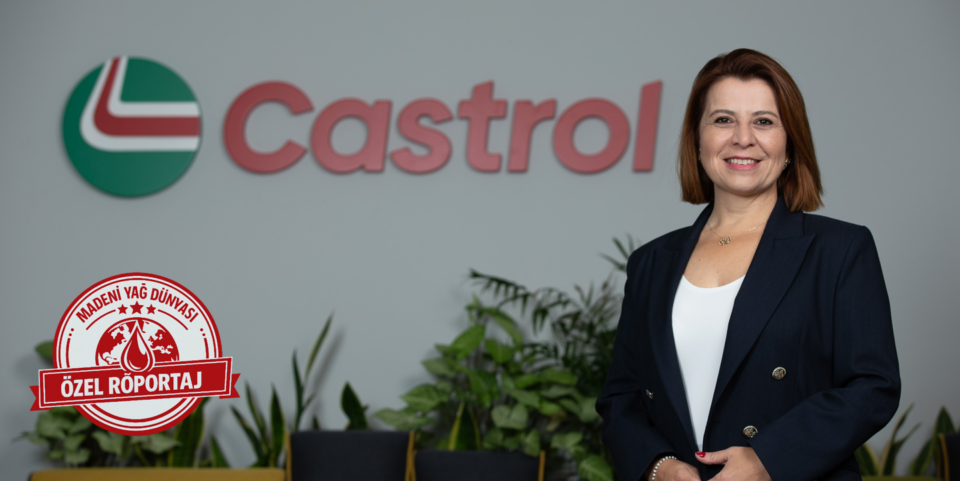
Interview with Nilay Tatlısöz, General Manager of Castrol Türkiye, Ukraine, and Central Asia (TUCA)
Castrol is guiding the transformation of the lubricants industry with its performance in Türkiye and across the region. Even during a period when the market remained flat, the company continued to grow in all segments it focused on, achieving a 14% increase in market share in passenger car engine oils. According to PETDER data, the company entered 2026 by consolidating its market position, reemphasizing itself as one of the industry’s benchmarks with its competitive structure and exemplary business model. Castrol’s Gemlik Production Facility, with its increasing capacity and strategic role, further strengthens the company’s regional power.
Behind Castrol’s success lies not only a strong brand heritage but also joint engineering projects with manufacturers and a multi-layered, extensive sales network that penetrates the market with a holistic approach. In Türkiye, a broad passenger car sales network of 23 distributors and strong access to independent service points enhance the brand’s effectiveness in the field, while high performance, technical expertise, and a sustainable price–performance balance position Castrol as a trusted solution partner for its customers.
At the same time, Castrol is playing a key role in the future of the industry with a broad vision that spans from sustainability to e-mobility. Castrol ON e-fluids developed for electric vehicles set new standards in critical areas ranging from battery thermal management to efficiency, while the HYSPEC (Hybrid Specification) performance standard, designed specifically for hybrid vehicles, stands out as a concrete example of the company’s engineering approach to evolving mobility needs. In the field of circular economy, the “Castrol More Circular” program enables used oils to be reprocessed into base oils, making sustainability not just a goal but an integral part of the business model. All these steps demonstrate that Castrol is not only shaping today but also the future mobility ecosystem. Indeed, the brand’s technology and innovation power has even found a place in space projects.
We discussed all these topics in detail with Nilay Tatlısöz, General Manager of Castrol Türkiye, Ukraine, and Central Asia (TUCA), and gained important insights into the future of the industry.
How did Castrol Türkiye and the regional organization perform in 2025? How did you start 2026? How would you evaluate the year in terms of your goals, market position, and the added value you provide to the Turkish economy?
As Castrol, we left behind a very dynamic and successful year. According to PETDER data, the Turkish lubricants market in 2025 showed limited growth compared to the previous year, following a flat trend. A similar volume was recorded in automotive lubricants. Nevertheless, Castrol outperformed the market both in 2024 and 2025, consolidating its market position. In 2025, we grew by around 6%, and the 14% increase we achieved in passenger car engine oils made a significant contribution to our overall market share. We managed to increase our share in all segments we focused on, raising our total market share by 1.5 points and strengthening our current position.
Thanks to this strong performance, we maintained and further advanced our position across motorcycle, car, and heavy commercial vehicle engine oil segments. Behind this momentum lie the strong collaborations we have developed with automotive manufacturers, our extensive sales and service network, and our strategic approach that closely follows market transformation. Castrol continues to be not only a strong player in the market but also one of the key brands taking part in the industry’s transformation.
Our operations in Türkiye also make a significant contribution to the national economy. Our Gemlik Production Facility, one of our eight plants in Europe, serves as a strategic hub for Türkiye and the wider META region. The facility, which has been producing for nearly 64 years, has increased its capacity from 95 million liters to 135 million liters over the past three years thanks to a $20 million investment. Our goal for the coming period is to reach 160 million liters by 2030.
We started 2026 with this strong momentum. Our first-quarter performance is in line with the growth and market share targets we set at the beginning of the year. In the period ahead, we will continue to strengthen our position in the industry and add value to the Turkish economy through our investments, product innovations, and collaborations.
A global brand like Castrol can offer competitive prices in Türkiye even during periods when costs rise. What strategies lie behind this success, and what are the key factors that enable you to stand out in the local market?
At Castrol, we enjoy being competitive in every field. Our long-standing technological strength and collaboration-based working model provide us with significant advantages. As a brand, we work with vehicle manufacturers, machinery and equipment producers through a joint engineering approach. From the very beginning, we co-develop the oils and fluids required for new-generation engines and evolving emission requirements. This approach enhances both product performance and operational efficiency, enabling us to deliver a sustainable price–performance balance to our customers.
Another important factor that makes a difference in Türkiye is our strong and multi-layered sales structure. In commercial and industrial fields, our direct sales network operates across a wide spectrum—from road construction projects to mining, from ports to the iron and steel industry. On the OEM side, our first-fill and recommendation agreements secure a strong position in authorized service centers. In addition, our extensive indirect sales network of 23 distributors across Türkiye and our investments in independent service points significantly strengthen the brand’s market reach and customer loyalty.
Thanks to this holistic approach, Castrol is not only a brand that offers competitive prices but also a solution partner that stands out in the industry with high performance, technical expertise, and a strong partnership model. Our goal is to continue delivering sustainable solutions that reduce customers’ total cost of ownership while adding value to their business processes.
What does being a key actor in the market mean for Castrol? What responsibilities come with this position?
For Castrol, this position means taking responsibility for guiding the industry. As a global brand with 127 years of history, Castrol has played a significant role in the development of lubricant technology, while in Türkiye it has continued to contribute to the transformation of the industry through investments and innovative practices for more than 65 years.
At this point, it is gratifying for us to see that the business models we have developed, our market approach, and our communication style are closely followed within the industry. This demonstrates that Castrol is a brand that is taken as a reference not only for product performance but also for its vision and expertise. We believe that competition is an important factor that drives the industry forward. At Castrol, we define our guiding position not only by market share but also through our innovative approach and our practices.
The world of electric vehicles and e-mobility is growing rapidly. With the Castrol ON e-fluids series, what kind of position do you aim to achieve in the Turkish market and globally? How do you evaluate the contribution of these products to the performance and battery life of electric vehicles?
For more than 125 years, Castrol has been a brand that develops technology wherever there is movement. We have been guiding the industry in internal combustion engine oils for decades. Today, we are bringing the same engineering strength into the world of electric mobility. We see the rapid adoption of electric vehicles not as a threat but as a major opportunity, because these vehicles create very different needs compared to traditional engines—cooling, efficiency, and performance requirements. Our goal at Castrol is not only to be part of this transformation but to be one of the players guiding it.
In this context, the Castrol ON e-fluids series was specifically designed to ensure efficient operation of battery thermal management, driveline systems, and electronic components in electric vehicles. These products directly contribute to longer battery life, optimized charging times, and extended driving range. Especially under fast-charging and high-performance conditions, effective heat management plays a critical role in the development of EV technology. With our expertise in fluid engineering, we provide innovative solutions to meet this need.
Looking at our global position today, two out of every three electric vehicles produced worldwide are initially filled with Castrol ON e-fluids during manufacturing, which demonstrates our strong standing in this field. In Türkiye, we also see rapidly growing interest in electric vehicles. By strengthening our OEM collaborations and developing next-generation products, we aim to consolidate our position in this expanding market.
It is not only electric vehicles—hybrid vehicles are also becoming more prominent during the transition period. Castrol plays a critical role here as well. Based on the specific needs of hybrid vehicles, we developed a new performance standard called HYSPEC (Hybrid Specification). HYSPEC is not a product; it is a measurable technical reference framework created according to the real operating conditions of hybrid engines.
Oils that meet the HYSPEC standard stand out in critical areas such as higher resistance to contaminants, rapid adaptation to intermittent engine operation, and maintaining thermal efficiency across the system. Developed on the basis of Castrol’s more than 25 years of hybrid experience and extensive field testing, this standard delivers up to 25% performance advantage compared to existing oil standards.
With your “Castrol More Circular” program, the aim is to bring used oils back into the economy. How do you foresee the contribution of this model to sustainability and its long-term impact? Could you elaborate on your sustainability approach?
The lubricants industry is undergoing a strong sustainability transformation. Resource efficiency and circular economy are no longer just a choice but an inevitable necessity for the entire sector. Today, both globally and in Türkiye, all manufacturers face new regulations and standards that include the use of base oils obtained through advanced re-refining. Therefore, this issue is not unique to Castrol but represents a structural transformation affecting the entire industry.
At Castrol, we differentiate ourselves by turning this into tangible value for our customers. With the “Castrol More Circular” program implemented in Türkiye, we ensure that used oils are re-refined through advanced technological processes into high-quality base oils, bringing them back into the economy.
Every year, a significant amount of used oil is generated in Türkiye, and a large portion of it still cannot be recovered. By unlocking this potential, we also create a model that delivers both environmental and operational benefits for our partners. Within the program, waste oils collected from businesses are processed through advanced re-refining in collaboration with our specialized partner, and reintegrated into the value chain. In this way, a resource once seen as waste becomes part of sustainable production.
Is the use of base oils obtained through advanced re-refining of used lubricants a regulatory requirement? Where are these base oils used, and how is their impact on product performance managed?
As we mentioned earlier, the use of base oils obtained through advanced re-refining of used lubricants is not unique to Castrol. Manufacturers are required to use a certain proportion of these base oils in their production. The critical point here is the technology through which these base oils are refined, the quality standards they undergo, and the specific areas in which they are utilized.
At Castrol, we apply extremely rigorous quality management throughout this process. Base oils obtained through advanced re-refining are subjected to comprehensive refining and purification processes to meet Castrol’s very high performance standards. However, these base oils are not used across every product group; they are applied only in areas defined by technical requirements and performance criteria.
Our difference lies in the fact that we do not view this process merely as a regulatory obligation, but rather transform it into a model that creates value for our customers. With the “Castrol More Circular” approach, we ensure that waste is brought back into the economy while at the same time offering a holistic solution that optimizes costs for our partners and contributes to the transformation of the industry.
As Castrol Türkiye, what are your market goals for the next 3–5 years? What priorities stand out in your export and domestic market strategies?
At Castrol, our goal is to strengthen our market position while continuing to be a solution partner that creates value for our business partners. Türkiye is not only a strong market within the Castrol world, but also a strategic hub where many innovations are developed and strategies that inspire global operations are shaped. We reflect this dynamism both in our domestic growth strategies and in our export and regional management objectives. Castrol Türkiye is also an important market within our global strategy. Alongside China, India, and the United States, Türkiye is one of the four markets where Castrol plans to invest more heavily.
As always, one of our key priorities in the coming period will be to develop solutions that enhance the efficiency of our partners, make their work easier, and support their competitiveness. This approach goes beyond simply offering products; it encompasses creating business models that contribute to our customers’ operational processes. The fact that many practices we have developed in Türkiye are now being adopted globally is a direct result of this vision.
At Castrol, we go beyond being a brand that merely grows market share. In doing so, we further strengthen our position as a long-term value creator and a strong business partner that contributes to the development of the mobility ecosystem together with all our stakeholders.
OEM collaborations and R&D processes play a critical role in Castrol’s strategy. Could you share examples of the projects you carry out with manufacturers?
One of the most important elements of Castrol’s strong position is its long-standing collaborations with the world’s leading vehicle and equipment manufacturers. Through hundreds of joint tests, engineering studies, and development processes, we position ourselves not just as a lubricant supplier but as a trusted technology partner. With our “Beyond oil” approach, we aim to deliver solutions that contribute to our partners’ performance, efficiency, and sustainability goals.
Motorsports and advanced technology platforms are also an integral part of these collaborations. Our nearly 100-year partnership with Ford, our long-standing work with Audi, and today’s development of products tailored to hybrid power units in Formula 1 all demonstrate our technological expertise. Locally, our collaboration with Castrol Ford Team Türkiye is a strong example of our performance-driven approach. In addition, the special solutions developed for Honda in MotoGP and our partnership with NASA spanning more than 65 years highlight how our innovation power extends into diverse fields.
Castrol’s strategic collaboration with Lunar Outpost also marked a historic milestone, as the first commercial exploration vehicle was sent to the Moon. As part of the Lunar Voyage 1 (LV1) mission, the commercial lander and the MAPP rover were delivered to the lunar South Pole. This mission was featured in the new documentary Drive Me To The Moon, which showcases Castrol’s expertise in space technologies and advanced engineering. The documentary captures the journey from testing to lunar landing, demonstrating how engineering precision, durability, and interdisciplinary collaboration play a critical role in challenging environments such as space.
Today, in addition to global manufacturers such as Ford, Renault, Dacia, Volvo, and Jaguar Land Rover, we also collaborate with key brands in Türkiye including Doğuş Otomotiv, Yüce Auto, Isuzu, Suzuki, and Komatsu. These partnerships further strengthen Castrol’s position as a trusted partner in the industry. Thanks to this technological expertise and strong partnership model, we continuously enhance the performance and efficiency of the products we bring to market, while shaping the future of mobility together with our partners.
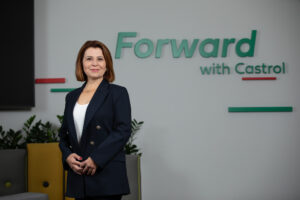
We have just marked International Women’s Day on March 8. As a female executive, how do you evaluate the visibility of women in the lubricants industry?
I believe that for women, sometimes the boundaries do not stem from the industry itself but from the patterns we create in our own minds. Of course, this only becomes meaningful when all opportunities to provide equal conditions and support for women are ensured and utilized. As in every sector, in ours too, the development of competencies for all employees—women, men, young, or experienced—and embedding these into the company culture is one of the most important elements of creating value. At the center of my leadership philosophy lies the principle of giving people space, allowing them the right to make mistakes, and creating an environment where they can realize their potential. It is crucial that women, as in every sector, are supported in terms of competencies and opportunities, and encouraged to raise their hands for those opportunities.
Today, leadership is no longer defined solely by performance targets and numerical results. What truly makes a difference is the impact you leave on your teams, the sense of trust you build, and the ability to contribute to people’s development.
Working within a global and well-established organization like Castrol also provides a significant advantage that supports this perspective. In Türkiye, the fact that women account for around 45% of our central organization is an important indicator for us. Our aim is not merely to create numerical balance, but to bring diverse perspectives into the corporate culture and build more inclusive and stronger teams.