
Esin Özyazgan – Technical Manager, ADCO
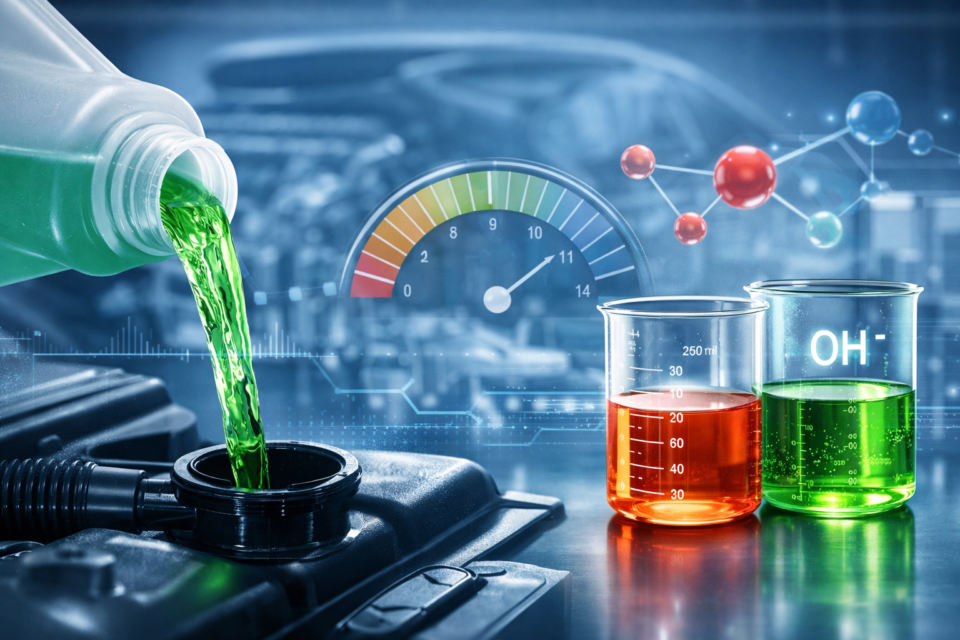
Advances in engine design have elevated coolants from simple protective fluids to critical components of long-term performance. Two parameters now define modern antifreeze technologies: nitrite-free chemistry and high reserve alkalinity (RA). In this article, Esin Özyazgan, Technical Manager at ADCO, outlines the evolution of antifreeze formulations and explains why these factors are essential for efficiency and durability. Özyazgan notes that the corrosion inhibitors developed by Tecnofluid, represented by ADCO, meet modern antifreeze requirements and can be used with confidence.
The Evolving Role of Antifreeze: From NAP to Nitrite-Free
In modern engines, coolants are no longer merely fluids that prevent freezing and boiling; they are critical engineering components directly influencing efficiency, durability, and service life. Increased power density, higher operating temperatures, and the widespread use of lightweight alloys have significantly raised performance expectations from antifreeze formulations.
In this context, nitrite-free formulations and high reserve alkalinity (RA) values have become the defining parameters of modern antifreeze technologies.
Antifreezes containing NAP (nitrite, amine, phosphate) additives, developed in the 1970s, initially provided effective corrosion protection. However, at elevated temperatures, nitrites tend to degrade, form deposits, and deplete rapidly, making them insufficient for extended service intervals. As a result, the transition to nitrite-free antifreeze technologies accelerated in Europe beginning in the 1980s, and today nitrite-free chemistry has become a fundamental quality criterion in modern antifreeze formulations.
Corrosion Protection Mechanisms and the Contribution of OAT Technology
Corrosion inhibitors in coolants protect engines through two primary mechanisms:
- Inorganic Additive Technology (IAT): Forms a continuous protective film layer on metal surfaces.
- Organic Additive Technology (OAT): Activates chemically at the precise point where corrosion begins.
Organic technologies provide protection only where necessary, reducing additive consumption and enabling extended service life. In traditional silicate-containing antifreezes, particularly in heavy-duty engines, there is a risk of gel formation due to silicate polymerization. OAT technology, being silicate-free, eliminates this risk and helps maintain system cleanliness.
Reserve Alkalinity and High-Temperature Stability
Reserve alkalinity refers to an antifreeze’s capacity to neutralize acidic by-products. A high RA value:
- Maintains pH stability,
- Reduces corrosion risk,
- Extends service intervals.
In modern engines, high RA is now a critical performance indicator.
The trend toward engine downsizing and the widespread adoption of turbocharged engines result in higher thermal loads within cooling systems. Therefore, modern antifreezes must combine high-temperature stability with nitrite-free chemistry to ensure reliable protection.
Current Technologies and Specifications
OAT, LP-OAT, and Si-OAT technologies stand out for their extended service life, nitrite-amine-phosphate-free formulations, superior protection of aluminum and lightweight alloys, and high-temperature stability. In Si-OAT technology, silanized organic acids are used to enhance protection, particularly on aluminum surfaces.
Three major trends characterize modern antifreeze technologies:
- The widespread adoption of nitrite-free formulations
- Increasing reserve alkalinity levels
- Development of high-temperature-resistant OAT/Si-OAT technologies
ASTM D3306 serves as the primary standard for light-duty engines, while ASTM D4985 applies to heavy-duty engines. Specifications continue to evolve in parallel with changes in engine materials.
Although antifreeze color may provide general information about formulation type, there is no standardized color coding among manufacturers; therefore, technical specifications remain the definitive reference.
Studies conducted in the 1990s indicated that mixing OAT and inorganic antifreezes could increase corrosion risk. However, fleet tests performed by Volkswagen in 2003 demonstrated that OAT (TL 774 D/F) and inorganic antifreezes can be mixed under controlled conditions.
Modern Antifreeze Production with Tecnofluid Inhibitors
Modern engine technologies demand higher performance parameters from cooling fluids. Nitrite-free formulation and high reserve alkalinity are not merely formulation choices but strategic requirements for extended service life, system reliability, and thermal stability.
Tecnofluid inhibitors, available in nitrite-free, OAT, LP-OAT, and Si-OAT-based formulations and designed to support high reserve alkalinity levels, meet the requirements of modern antifreeze production. Through the corrosion inhibitors developed by Tecnofluid, which ADCO represents, we continue to offer advanced antifreeze technologies to our customers with an expanding product portfolio.
TecnofluId corrosIon InhIbItors, represented In TUrkIye by ADCO, meet modern antIfreeze requIrements and can be used wIth confIdence.