
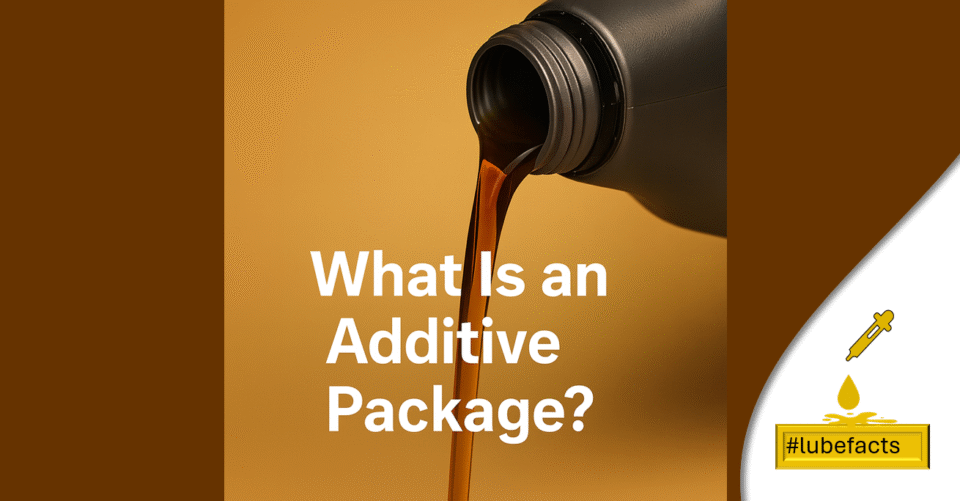
Lubricants are not made of base oil alone. In fact, the key to performance often lies not in the base oil, but in the additive package.
An “additive package” is an integrated system composed of dozens of chemical additives blended in precise ratios. These packages deliver a balanced combination of components with distinct functions — such as detergents, dispersants, viscosity modifiers, anti-wear agents, and oxidation inhibitors.
🔹 OEM Approval Compatibility:
If the additive formulation does not meet the technical requirements of automotive and engine manufacturers (OEMs), even the highest-quality base oil may fail. OEMs only approve specific additive systems.
🔹 Additive Compatibility = Oil Compatibility:
The interaction between additives also affects performance. For example, an anti-wear agent and an oxidation inhibitor may destabilize each other in the same environment. Therefore, additive packages are evaluated not just by their ingredients, but by how well those ingredients work together.
🔹 Role of Technology Suppliers:
Only a handful of technology providers worldwide develop additive packages. Oil manufacturers either source “approved” packages from these firms or integrate them into their own formulations.
✨ In summary:
The lifespan, protective capacity, and operational consistency of a lubricant are directly linked to the chemical engineering quality of its additive package.
#AdditivePackage #LubricantTechnology #OEMApproval #EngineProtection #OilFormulation #Tribology #LubeFacts