
Engine oil is often seen as the “insurance policy” of the engine. Many believe that using the right oil will fix everything and eliminate problems. The reality is a bit more nuanced.
🔧 What does engine oil protect?
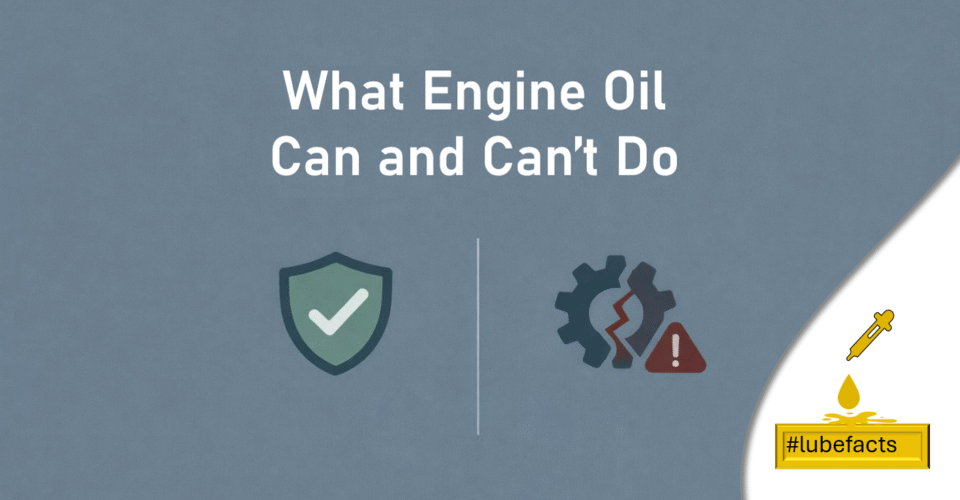
Engine oil essentially fulfills three critical functions:
1️⃣ Reduces friction: Forms a film between moving parts, limiting metal-to-metal contact.
2️⃣ Slows down wear: Thanks to its additive package, it protects surfaces and prevents micro-damage from escalating.
3️⃣ Supports cleanliness and heat control: Keeps soot, deposits, and combustion residues suspended; balances heat distribution.
This allows the engine to operate healthily for a long time under its designed conditions.
⚠️ What can’t engine oil protect?
Here, the often-overlooked limits come into play:
❌ It cannot compensate for mechanical design flaws.
❌ It does not fix incorrect assembly, tolerance issues, or material defects.
❌ It cannot reverse the consequences of long-neglected maintenance.
❌ It does not eliminate the effects of overload, extreme heat, or misuse.
Even the highest-quality oil can only delay a physical failure; it cannot remove it.
🧠 Why does this perception exist?
Because an oil change often:
🟢 makes the engine quieter,
🟢 smooths operation,
🟢 creates a temporary sense of “improvement.”
This feeds the perception that “oil solved the problem.” In reality, oil rarely hides the issue—it only suppresses the symptoms for a while.
🎯 The right perspective
Engine oil is a protection tool, not a repair solution.
True engine health is achieved when the right oil, correct specification, proper maintenance, and proper usage come together.
Bottom line: Engine oil does a lot, but it doesn’t perform miracles. Positioning it correctly protects both the engine and expectations.
#EngineOil #Lubricants #Maintenance #Automotive #IndustrialKnowledge