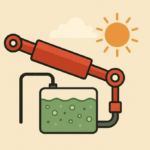

One of the biggest enemies of oil systems is water contamination. Water often mixes into oil through unnoticed pathways: condensation, seal or cap leaks, improper storage, and transportation.
💧 Why is water dangerous?
- Corrosion: Causes rust on metal surfaces
- Additive degradation: Weakens the performance additives in oil
- Oil film weakening: Protective layer between surfaces thins, increasing wear
- Emulsion formation: At low temperatures, reduces oil flow and pumpability
- Misleading measurements: Water can distort oil level and viscosity readings
🔬 How is it detected?
In laboratories, water presence is typically measured using methods such as Karl Fischer titration. Regular oil analysis is the most reliable way to identify the problem early.
🛡️ Solutions:
- Use water-separating additives
- Ensure proper storage conditions (protected from moisture and rain)
- Conduct regular oil checks and analyses
Even if water is not always visible, it damages oil systems. Preventing and controlling its presence is therefore critical.
#OilContamination #LubricationSystems #WaterInOil #IndustrialMaintenance #ConditionMonitoring #LubeFacts