
HOW WILL THE LUBRICANT SECTOR EVOLVE AMID A HORIZONTAL TREND?
With more than 160 years of heritage, Quaker Houghton stands as a global leader in metalworking and industrial lubricants, renowned for its engineering-driven approach and deep expertise. Headquartered in the United States, the company has established itself as a trusted solution partner wherever metal meets industry, supported by a worldwide production network, broad sector coverage, and decades of technical know-how. Quaker Houghton’s business model is built on continuous innovation, operational excellence, and sustainability. This makes the company far more than a supplier of products; it is a strategic industry stakeholder that enhances processes and drives efficiency.
By embedding R&D, digitalization, and environmental responsibility into its practices, Quaker Houghton continues to strengthen its leadership in the global market, achieving steady growth in the highly specialized field of metalworking. Looking ahead, the company’s vision rests on three pillars: circular economy, carbon management, and smart process solutions.
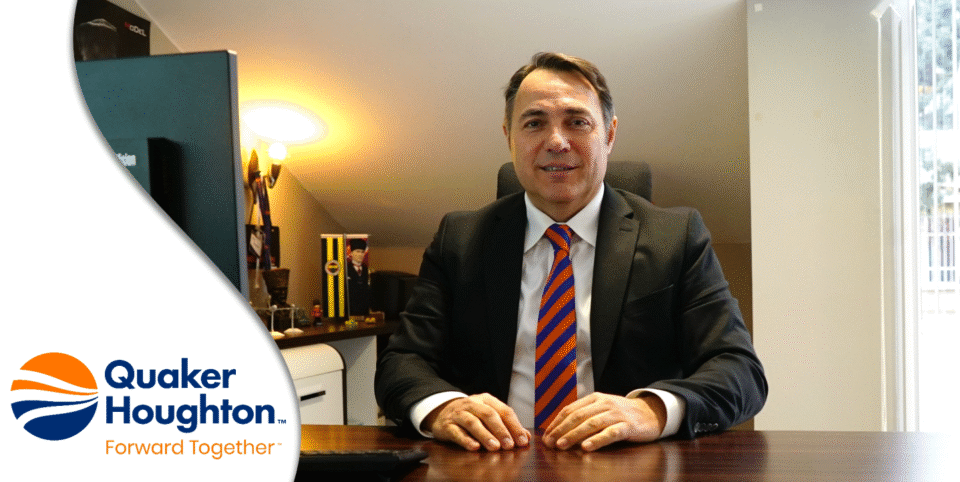
In this exclusive interview, Tolga Örsal, Commercial Director for Türkiye, Bulgaria, and Central Asia, reflects on the defining dynamics of 2025 and shares his measured yet forward-looking predictions for 2026. Drawing on nearly 25 years of industry experience, Örsal provides insights that combine Quaker Houghton’s global perspective with practical lessons from the field. As we step into the new year, this conversation offers industry professionals an inspiring and thought-provoking outlook on the lubricant sector’s trajectory and the role of innovation in shaping its future.
Could you tell us about your professional life and experience?
First, let me briefly introduce myself. I was born in Niğde in 1972. As the eldest child of a teacher mother and a bank manager father, I began my education in Istanbul. After graduating from Haydarpaşa High School, I completed my Mechanical Engineering degree at Yıldız Technical University in 1994. I later earned an MBA from Işık University. Driven by a special interest in history, I also graduated from Anadolu University’s History Department in 2024. I have been married for 26 years and have a daughter and a son, both of whom will be starting university next year.
Regarding my professional life, after graduating from university, I chose to begin my career in sales, as being in the field suited my nature more than working in production. Between 1994 and 1999, I held various sales positions at Henkel-Ecolab, and from 1999 to 2001, I worked at Novel Foreign Trade. In 2001, I entered the lubricants industry as a Regional Sales Engineer in the Special Industrial Oils division of bp-Castrol Lubricants. At the time, I never imagined this path would become such a long-lasting and exciting journey.
At bp-Castrol, I first served briefly as Business Development Manager, then spent nearly 7–8 years as Country Sales Manager for Special Industrial Oils. These roles gave me a deep understanding of the Turkish industry and the dynamics of the local lubricants market. I learned about competitive conditions, the strategies of our valued competitors, management models during turbulent economic periods, regulatory frameworks, and most importantly, customer needs and how to meet them.
Building on this experience, in 2010 I was appointed to the Global Key Accounts team, responsible for the Airbus-EADS group. Over two years, I gained valuable insights into international management models, global customer relations, cross-platform teamwork, the transfer of best practices across countries, and the development of process-specific solutions.
In 2012, I became Sales Manager responsible for Bulgaria and the Caspian Region, my final role at bp-Castrol. During this period, I gained experience both in understanding the Turkic world and in managing business operations in a region undergoing economic, cultural, and political transformation.
At the beginning of 2014, my 13-year journey with bp-Castrol came to an end, and I joined Houghton International as General Manager of Türkiye Operations. With the support of my team, we embarked on a rapid restructuring process. We made significant changes to our staff and sales channels, reorganized the responsibilities of our sales and technical teams to improve customer service, and restructured our dealer network to ensure nationwide access to our products. The results were swift: with double-digit volume growth year after year, Houghton secured its rightful place in the market.
In 2019, the merger of Quaker Chemical and Houghton International marked a turning point in the industrial lubricants sector. The union of the world’s top two companies in metalworking industrial lubricants created a global giant with approximately 20% market share. This merger provided us with an opportunity to strengthen our position in Türkiye. Following the merger, in addition to my responsibilities as General Manager of Türkiye, I was appointed Commercial Director for Türkiye, Bulgaria, and Central Asia. During this period, we also launched local production through an asset sale and contract manufacturing agreement with 3S Engineering Company, our distributor and licensed producer in Türkiye prior to the merger.
In 2026, I will enter my 25th year in the lubricants sector. Looking back, I realize that while I have gained invaluable experience over these years, the market continues to teach me something new every day, and that is a source of great satisfaction. When I first entered the industry 25 years ago, I never imagined it would be such an exciting and educational journey. As someone who believes that learning never ends, I look forward with enthusiasm to what the future holds.
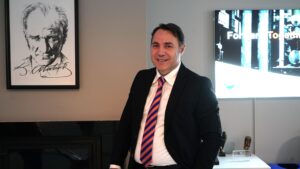
Could you tell us about the history and activities of Quaker Houghton?
Quaker Houghton was established in 2019 through the merger of two major global firms. Although the company itself may appear relatively new, it is in fact a true market leader, built on the legacy of two well-established organizations with roots dating back to 1865 and 1918.
Houghton International was founded in 1865, just six years after oil was first discovered in America. One of its earliest products, the rust-preventive Cosmoline™, remains available today. Over its 160-year history, Houghton pioneered numerous innovations, including the world’s first water-based fire-resistant hydraulic fluid and the first biodegradable water-miscible cutting oil, developments that secured its strong market presence.
Quaker Chemical, founded in 1918 in the United States, also became a key player in the industry, building more than a century of expertise.
Together, these two companies brought complementary strengths to the table. The merger of Quaker and Houghton can be considered one of the most significant in the lubricants sector, a seamless integration, much like fitting Lego pieces together. Quaker Chemical was a global leader in the iron and steel industry and non-ferrous metals, while Houghton International held extensive expertise and leadership in metal processing. By combining their capabilities, the two companies formed a global powerhouse under the name Quaker Houghton, headquartered in Conshohocken, Philadelphia, USA.
Today, with more than 35 factories across 25 countries and a workforce of over 4,400 employees, Quaker Houghton serves the world’s largest companies in more than 100 countries. As a publicly traded company listed on the New York Stock Exchange, Quaker Houghton operates with a commitment to transparency and accountability.
Its customers manufacture steel, aluminum, machinery, and industrial components that power and advance the global economy. In fact, most people interact daily with products that Quaker Houghton has helped create. From automobiles and airplanes to agricultural and mining equipment, bridges, household goods, bicycles, beverage cans, and countless other consumer items, Quaker Houghton’s solutions play an essential role in modern life.
We classify our main business lines into three fundamental areas:
- Primary Metals: Iron and steel products, aluminum products, bar and wire drawing production
- Transportation: Automotive, aerospace and defense, marine
- Energy, Industry, and Consumer:
- Energy: Oil and gas (offshore and refined), renewable energy (wind, hydroelectric, and solar), mining, pipes and tubes
- Machinery Industry: Machinery, heavy equipment/agriculture, general industry
- Consumer Appliances: Containers, white goods, electronics
We provide products and solutions that support customers across these sectors, covering the entire production value chain.
For example:
Process Fluids
In addition to rolling oils, mold release agents, rust preventives, and tempering fluids used in the metal industry, this product group includes water-miscible and neat cutting oils, heat treatment oils, forging fluids, high-pressure mold release agents, cleaning fluids, and coating oils, all essential for the metal processing industry.
Operational Solutions
Our fire-resistant hydraulic fluids, industrial lubricants, and greases are critical to the efficient operation of machinery, ensuring performance, reliability, and safety across industries.
Our presence in Türkiye began in 1998 with Houghton’s initiative. Following the 2019 merger, we continued under the name Quaker Houghton. Partnering with 3S Engineering, our long-standing distributor and licensed producer, now focused solely on manufacturing after the merger, we continue to produce selected products locally. This production model provides significant operational advantages, allowing us to respond quickly to customer demands and deliver flexible solutions tailored to market needs.
With our experienced and dedicated team in Türkiye, we maintain proximity to our customers, able to reach any of them within a maximum of 1.5 hours, ensuring strong relationships and responsive service.
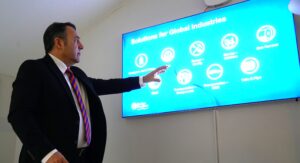
How was 2025 for the lubricants sector? Could you evaluate the strategic transformation, commercial developments, and changing economic dynamics in the sector?
To assess how 2025 unfolded, it is essential to consider the economic and political developments in our country and region since 2022.
The brief “false spring” that followed the stagnation caused by the Covid pandemic proved short-lived. Europe’s economic downturn in recent years, ongoing wars and conflicts in neighboring regions, and global power struggles have all placed significant stress on both Türkiye and the global economy. Meanwhile, the shift toward electric vehicle production has negatively affected Türkiye’s automotive industry, traditionally one of its strongest sectors.
Beyond these external pressures, high inflation and interest rates in Türkiye have driven up financial costs, impacting customers across all industries.
Since there is no official report on lubricant consumption in Türkiye’s industrial market, we rely on production capacity reports, export and production data from target sectors, and insights gathered by our teams and distributors in the field. These sources show that the total industrial oil market continues to grow year by year, but at a slower pace than in the past—reflecting more of a horizontal trend.
Historically, Turkish industry has demonstrated resilience in overcoming crises, earning respect abroad for its resources and the expertise of its managers. However, this particular downturn has lasted longer than previous ones. The inflationary and high-interest environment has dampened companies’ appetite for investment. While sector-specific analyses may vary, overall, the industry has managed to remain relatively stable despite the challenges.
The lubricants sector mirrored this trend in 2025: it was a difficult year, but rather than a sharp contraction, the market largely moved sideways. Certain segments showed signs of decline, yet others, such as aviation and defense, experienced growth.
Despite domestic and international headwinds, it is encouraging that the metalworking oils sector has maintained its strength. While the high growth rates of the past are no longer being achieved, the system continues to function. The most pressing issue is profitability, which has eroded significantly. Like many companies, we are addressing this challenge through internal efficiency improvements, ensuring that our customers continue to enjoy the reliability and comfort they expect from Quaker Houghton.
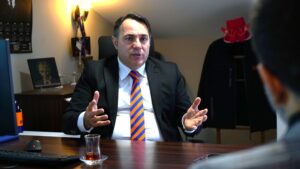
What areas did Quaker Houghton focus on in 2025? Was it a year in which the company achieved its goals?
In these turbulent times, Quaker Houghton Türkiye strengthened its closeness to customers. We have never defined ourselves merely as a lubricant supplier; our core vision is to be a trusted business partner. Guided by this principle, we prioritized delivering the right product and the right service rather than competing on price. Through our high-performance solutions, we sought to ease the pressure created by difficult economic conditions, and I believe we succeeded in this effort. I would like to take this opportunity to thank our customers once again for their trust and confidence in us.
When we asked ourselves, “How close are we to the goals we set at the beginning of 2025?” we saw that by November, we had reached our targets in Türkiye and across the wider geography under our responsibility. While our expectations were higher, achieving results above the previous year and meeting our targets in a period of economic contraction and stagnation is a positive outcome for us.
Our greatest advantage as Quaker Houghton lies in our presence across a wide range of sectors. From defense and civil aviation to the automotive industry and its sub-industries, from iron and steel to non-ferrous metals and maritime, our broad coverage allowed us to balance contractions in one area with growth in another. Supported by our production capacity, extensive dealer network, and dedicated direct sales team, we remained close to our customers throughout the year and delivered strong performance.
Despite the challenging environment, we continue to build on our success year after year, reinforcing our role as a reliable partner and a resilient leader in the industry.
How will 2026 unfold for the lubricants industry? What dynamics will affect our sector and your company in the new year?
Let me begin with what I would normally say at the end: we do not anticipate major changes. In other words, 2026 appears likely to resemble 2025 in many respects. The data we receive from abroad does not suggest a brighter outlook either. However, economic decisions taken within Türkiye, particularly regarding inflation, exchange rates, and interest rates, and the industry’s response to these factors, could create some variations.
I am by nature an optimist who prefers to see the glass half full. As we enter 2026, I hold positive expectations, such as the easing of conflict and tension in our region and the establishment of peace and stability. Should regional peace be achieved, Türkiye, with its strategic location, flexible production structure, entrepreneurial spirit, and young population, has the potential to accomplish much greater things.
In my 25 years in the lubricants industry, I have witnessed many difficult periods, both domestically and internationally. Turkish industry has consistently demonstrated resilience, often finding solutions even in the toughest circumstances. It is entirely possible for production to gain momentum, exports to rise, and our potential to be realized. That said, it is clear that 2026 will be a year in which careful calculations and prudent strategies are essential for all players in the market.
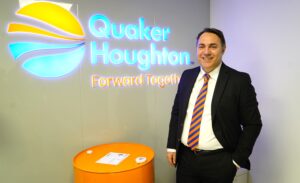
What will be on Quaker Houghton’s agenda in 2026? Can you tell us about your company’s future expectations and goals?
At Quaker Houghton, our priority remains providing customers with the best products and the highest level of service. Each year, we increase our investments in digitalization, and in 2026, we will continue advancing on this journey. Our growth strategy combines both inorganic expansion through acquisitions and organic growth through our own initiatives.
Recent acquisitions in engineering and software have enabled us to begin producing our own sensors. Leveraging this capability, we are developing our proprietary technology, Fluid Intelligence, which is designed to enhance system efficiency and improve customer profitability. Our goal is to support customers not only with products and services, but also with equipment solutions and digital innovations. Metal processing is a highly specialized niche within the broader lubricants sector. Rather than relying on external suppliers to meet the specific needs and complementary services of our product groups, we aim to provide these solutions ourselves. As a global market leader, we believe it is essential to maintain our leadership in digitalization, ensuring that we remain at the forefront of innovation and continue to deliver added value to our customers.
Quaker Houghton, whIle selectIve ın ıts partıcıpatıon ın trade faırs, organızes ındustry semınars to enable more qualıtatıve and targeted engagement wıth ıts clıents.
Could you tell us about your company’s policies regarding sustainability and the transition to a circular economy?
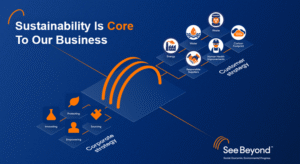
Prioritizing sustainability and embracing the circular economy is no longer a voluntary choice for companies – it has become a necessity. This principle lies at the very core of Quaker Houghton’s business.
We operate with the awareness that the world’s resources are finite and with the responsibility of leaving behind a more livable planet for future generations. Our goal is to meet today’s needs while managing environmental, social, and economic concerns responsibly and ethically, ensuring that future generations can thrive.
Our business strategy is designed to help customers achieve their own sustainability objectives. By combining our products, equipment, and expertise, we enable them to reduce waste, water, and energy consumption, lower their carbon footprints, and increase the use of recycled and renewable fluids.
Quaker Houghton’s sustainability commitment, focused on social, economic, and environmental progress, is built on four pillars:
- Continuous innovation
- Protecting our planet
- Safeguarding our employees and the communities in which we operate
- Sourcing materials responsibly
As a company producing hydrocarbon-based products, we have set an ambitious target: to achieve carbon neutrality by 2030. In line with this vision, we actively support the circular economy through recycling initiatives and the use of recycled products. We also collaborate strategically with some of the world’s largest automotive and bearing manufacturers to advance these efforts.
Quaker Houghton publishes its Sustainability Report every two years on our website, sharing our commitments, progress, and achievements with the public.
Could you share your company’s growth strategy and future goals for Türkiye and the surrounding regions?
Türkiye is one of the key growth centers for our company, alongside India and South America. In this context, I can confidently say that our investments in Türkiye will continue. As a Turkish organization, our growth strategy places a strong emphasis on performance. In today’s challenging economic environment, every company must treat each investment with utmost care, and every penny carries significant weight. For this reason, we are focused on providing our customers with long-term, efficient solutions, particularly through greater digitalization and enhanced equipment offerings. Competition is increasingly shifting toward these areas, and those who differentiate themselves here will earn greater prestige in the eyes of their customers.
The Turkish market excites us because we firmly believe in the potential of the Turkish industry and its capacity to achieve much more. At the same time, we see considerable growth opportunities in the Central Asian Turkic Republics, with which we share historical and legal ties, and we are actively strengthening our presence in those markets.
In short, we are not a static organization. We work actively and productively in the field, listening closely to our customers and responding to their needs. Despite the challenges, I am fully confident that we will achieve our goals in the coming year.