

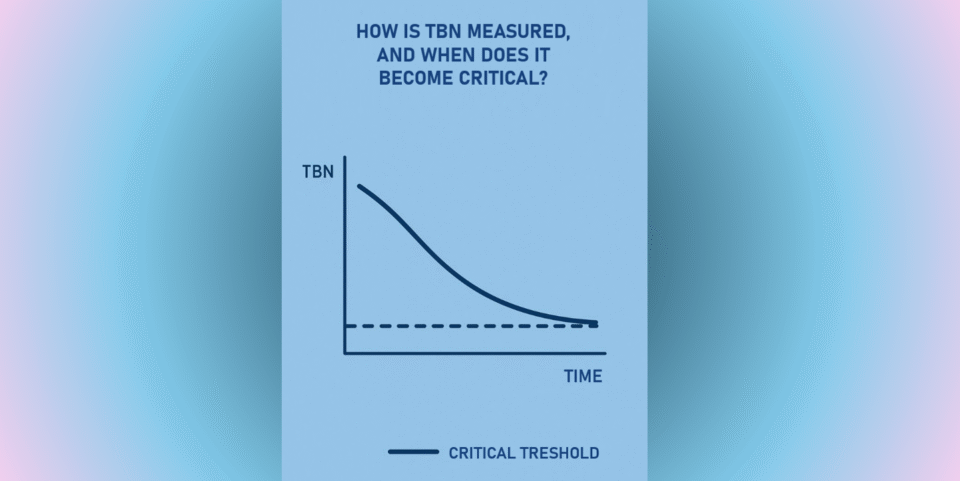
TBN, the Total Base Number, is the first line of defense against acidity in engine oil. Over time, this value decreases and may reach critical thresholds. So how is TBN measured, and when does it signal that an oil change is due?
TBN indicates the oil’s reserve alkalinity—its ability to neutralize acidic byproducts. It is determined using standardized titration methods, such as ASTM D2896 and D4739, which analyze the buffering capacity of base additives against acids.
📉 During use, TBN gradually declines due to the neutralization of acidic combustion byproducts. When it drops below a certain threshold (e.g., 3–4 mgKOH/g), the oil’s protective function weakens, leaving engine components vulnerable to acidic wear.
🧪 A reduction of more than 50% from the initial TBN value in oil analysis reports is often interpreted as a sign that an oil change is approaching. However, the critical limit may vary depending on the application and engine type.
🔁 TBN is best interpreted alongside TAN (Total Acid Number). If TBN is falling while TAN is rising, it’s a strong indicator that the oil has reached the end of its service life.
#EngineOilAnalysis #TBNMonitoring #LubricationScience #PreventiveMaintenance #LubeFacts