
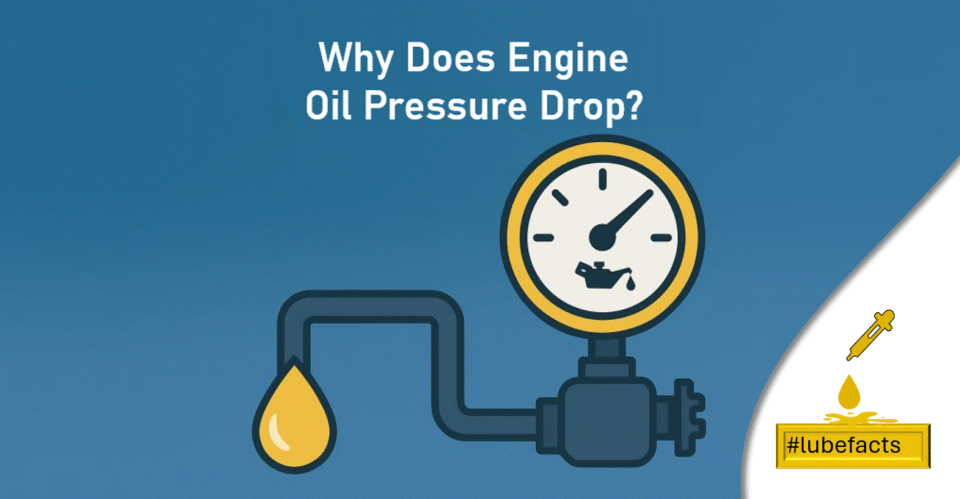
Engine oil pressure is like the “blood pressure” of a motor. Thanks to this pressure, oil forms a protective film between bearings, pistons, and other moving surfaces. A low oil pressure warning on the dashboard does not always point to a single cause.
🔹 1. Oil viscosity and temperature relationship
Viscosity (resistance to flow) is inversely proportional to temperature. In an overheated engine, oil thins and pressure drops. Choosing the wrong viscosity grade can intensify this effect, especially at high temperatures.
🔹 2. Oil level and circulation
Low oil makes it harder for the pump to draw. Air bubbles form, “cavitation” occurs in the system, and pressure becomes unstable. That’s why regular dipstick checks are a simple but critical maintenance step.
🔹 3. Oil pump and filter condition
Pump wear or a clogged filter can restrict oil flow, leading to pressure loss. If the filter’s bypass valve fails, oil becomes contaminated and pressure fluctuates.
🔹 4. Mechanical reasons
Increased bearing clearances, worn piston rings or seals can also cause systematic pressure losses. In this case, the issue lies not only in the oil but in the engine’s overall mechanical health.
📌 Conclusion:
Low oil pressure does not always mean “bad oil.” Sometimes the problem is in the oil’s properties, sometimes in system components. Regular oil analysis, filter replacement, and viscosity monitoring turn this signal into an “early warning.”
#EngineCare #OilPressure #LubeFacts